

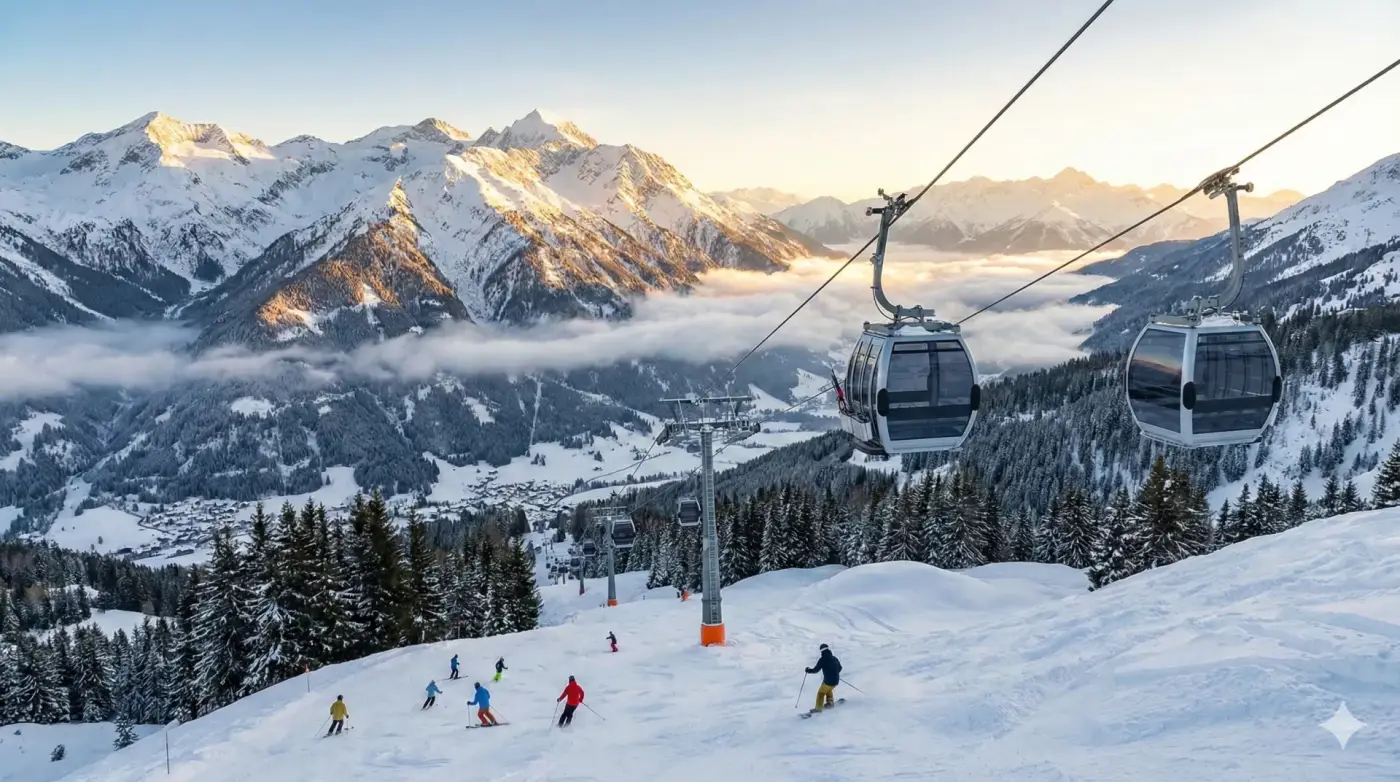
Dolomiti Superski is the absolute benchmark for skiers seeking variety and an extensive lift network. With more than a thousand kilometres of skiable terrain and hundreds of lifts, it is a destination that demands planning: choosing the right base, areas and days makes an enormous difference to the quality of your experience.
Key figures
In the Dolomiti Superski resort page you will find updated data on minimum and maximum altitude, kilometres of pistes and ski pass prices. These figures are the starting point for comparing it with alternatives such as Via Lattea or Madonna di Campiglio.
Choosing the right area
The resort is vast, so it pays to choose based on clear priorities:
- days focused on vertical drop and continuous skiing;
- scenic days with stops at altitude;
- family days with straightforward connections and wide pistes.
If you want to include iconic sections, you can plan a day with an ascent on the Funivia Seceda or towards Plan de Corones.
Ski passes: how to optimise your budget
Managing the ski pass is the single biggest factor in your overall costs. Three practical tips:
- Buy online when early-booking discounts are available.
- Choose a multi-day pass only if you plan intensive use.
- Always compare with other resorts using Compare Ski Passes.
Logistics: mistakes to avoid
The most common organisational errors are:
- underestimating travel times between valleys;
- changing area during peak mid-morning hours;
- not checking weather and lift status the previous evening.
A simple but rigorous plan helps you make the most of the lift network and minimise wasted time.
Who really benefits from Dolomiti Superski
It is ideal for those seeking a dynamic ski week with maximum flexibility from day to day. For short weekends, it can be more rewarding to concentrate your stay in a specific sub-sector to avoid lengthy transfers.
In short: enormous potential, but it requires a strategy. If your goal is to maximise pistes and lift quality, it remains one of the most complete options in Europe.
The 12 resorts of the consortium
Dolomiti Superski is not a single resort but a federation of distinct areas, each with its own character. Here is a quick overview to help you find your bearings.
Alta Badia offers 130 km of pistes in a Ladin landscape of great charm. The Gran Risa at La Villa is the historic venue for the World Cup giant slalom races, drawing packed grandstands every December. Gastronomy is its strong suit: Michelin-starred hotels and mountain huts coexist without contradiction.
Val Gardena is the largest resort in the group with 175 km of pistes. The Saslong downhill at Santa Cristina hosts the men’s World Cup downhill every year, one of the classics of the circuit. The Seceda cable car, with the jagged Odle peaks in the background, is one of the most reproduced images in the Alps.
Val di Fassa-Carezza represents the eastern gateway to the Sellaronda and offers direct contact with the red walls of the Catinaccio. The pistes are predominantly intermediate, well suited to families and those seeking satisfaction without excessive technicality.
Arabba-Marmolada is the most technical resort in the consortium. The Marmolada glacier, accessible at 3,265 metres, is the highest skiable altitude in the Dolomites. The black runs are demanding, the environment austere and the atmosphere less fashionable than elsewhere.
Plan de Corones (Kronplatz) stands out for its 360-degree panorama from the 2,275-metre summit: the Zillertal Alps to the north, the Dolomites to the south, and the Puster Valley to east and west. The lifts are modern, the summit restaurant has architectural appeal and the area is easily accessible from Brunico.
Alpe di Siusi (Seiser Alm) is the largest high-altitude plateau in Europe and offers a unique combination of Nordic and gentle downhill skiing. The pistes are not technically demanding, but the open landscape with the Dolomites as a backdrop more than compensates. Ideal for beginners and families with young children.
Cortina d’Ampezzo contributes 120 km of pistes across five separate sectors to the consortium. The Queen of the Dolomites is the host of the 2026 Winter Olympics and offers an elegant skiing experience with historic lifts and a high-quality service network. The skiing is matched by a level of hospitality that is difficult to equal.
Civetta with its 80 km of pistes is the least crowded resort in the group, making it an excellent choice for those who want to ski in peace and find more contained prices. The vertical walls of the Civetta, a UNESCO World Heritage site, offer a dramatic and unforgettable backdrop.
San Martino di Castrozza sits in the heart of the Trentino Dolomites and retains an intimate, family atmosphere far from the glamour of more well-known resorts. The Pale di San Martino dominate the horizon and the area is particularly suited to those seeking tranquillity, good snow quality and attentive service at reasonable prices.
Tre Valli Ladinies is the smallest and most authentic resort in the consortium. The pistes are quiet, prices modest and the atmosphere genuine. It is the right choice for those who want to experience Ladin culture without the tourist flows of the busier areas.
Passo San Pellegrino / Falcade functions as a natural link between Val di Fassa and the eastern part of the resort. The pistes are well-covered thanks to favourable aspect and the area is popular with local residents seeking skiing away from the crowds.
Careser / Pejo rounds off the offering with a high-altitude venue, excellent snow and still-limited fame that translates into uncrowded lifts and a genuine atmosphere. Those who discover Pejo rarely leave it behind: it is one of those resorts found by chance and returned to by choice.
The Sellaronda: a practical guide
The Sellaronda is the most celebrated ski circuit in the Dolomites: a route that touches four mountain passes — Gardena, Sella, Pordoi and Campolongo — crossing four valleys and four resorts in a single day. Total kilometres combining pistes and lifts exceed 40 km.
The circuit can be skied clockwise or anticlockwise. The anticlockwise direction (from Corvara towards Alta Badia and then Val Gardena) is generally more scenic in the first section, while the clockwise route is considered more technical because the vertical drop is concentrated in the early hours when legs are fresh.
The ideal departure time is between 9:00 and 9:30 at the latest. Starting later means queues at the Campolongo and Passo Sella lifts during mid-morning, when skiing traffic concentrates on the connecting nodes. In peak season this can mean waits of up to an hour.
For lunch, the classic stops are Passo Campolongo, with a wide choice of mountain huts, and Rifugio Bec de Roces, which offers Ladin cuisine and a direct view onto the rocky walls of the Sella. Both are located at the halfway point, ideal for a break without breaking the rhythm.
Allow between five and six hours of actual skiing to complete the circuit without rushing: this is the right amount of time to savour every section without turning the experience into a race against the clock.
Where to stay: choosing your base
The choice of base has an enormous influence on the quality of the entire week. Here are the four main options with their respective strengths.
Alta Badia / Corvara is the most central base relative to the Sellaronda network. Lift access is direct, the gastronomy is the best in the resort and you are 15 minutes of skiing from multiple valleys. The downside is the cost: hotels and restaurants are positioned at the higher end, with little room for those seeking savings.
Val Gardena / Selva di Val Gardena offers modern lifts and direct access to the Sellaronda from the northern side. The quality of accommodation is generally good, with a wide range from family apartments to four-star hotels. The position allows you to reach both Val Gardena and Arabba without lengthy transfers.
Val di Fassa / Canazei is the most affordable of the main bases. Accommodation and dining prices are noticeably lower than Alta Badia or Selva, while still maintaining a functional connection to the Sellaronda from the east. Less glamour, more substance.
Arabba is the choice for technical skiers. The black runs leading into the village are among the most demanding in the consortium, the environment is authentic and far from touristy, and prices remain reasonable. Those seeking nightlife and social buzz should look elsewhere.
The 5 most common mistakes
Even with the best planning, certain oversights recur frequently. Here are the most common and how to avoid them.
1. Late starts at weekends. The main pistes and connecting lifts become congested quickly after 10:00 on high-season weekends. The unwritten rule is simple: on the slopes by 9:00 at the latest, early breakfast and out of the hotel immediately.
2. Not buying the ski pass online. Physical ticket offices at weekends mean queues of 20 to 40 minutes. Buying online allows you to go straight to the lifts and, during early-booking periods, guarantees discounts of 10 to 15% off the list price.
3. Not checking weather and lift status the previous evening. Bad weather or strong winds can close inter-valley connecting lifts without notice. The official Dolomiti Superski app updates the status of every lift in real time and allows you to reorganise your day the night before.
4. Choosing a base that is too peripheral. Resorts on the edges of the consortium require long transfers to reach the central areas. Time lost on buses or in the car accumulates over seven days and significantly reduces actual skiing hours.
5. Ignoring closures of connecting lifts. The Sellaronda and inter-valley circuits depend on specific lifts. If one closes due to wind or maintenance, the circuit is broken and you must return to your own valley. Always having a plan B, meaning knowing the local pistes of the area where you find yourself, is an indispensable precaution.
Comprensorio correlato
Questo articolo e collegato a Dolomiti Superski.
Articoli correlati
Pianifica il soggiorno
Scegli dove dormire in montagna
Consulta le guide agli alloggi vicino agli impianti, con zone consigliate e criteri pratici.