

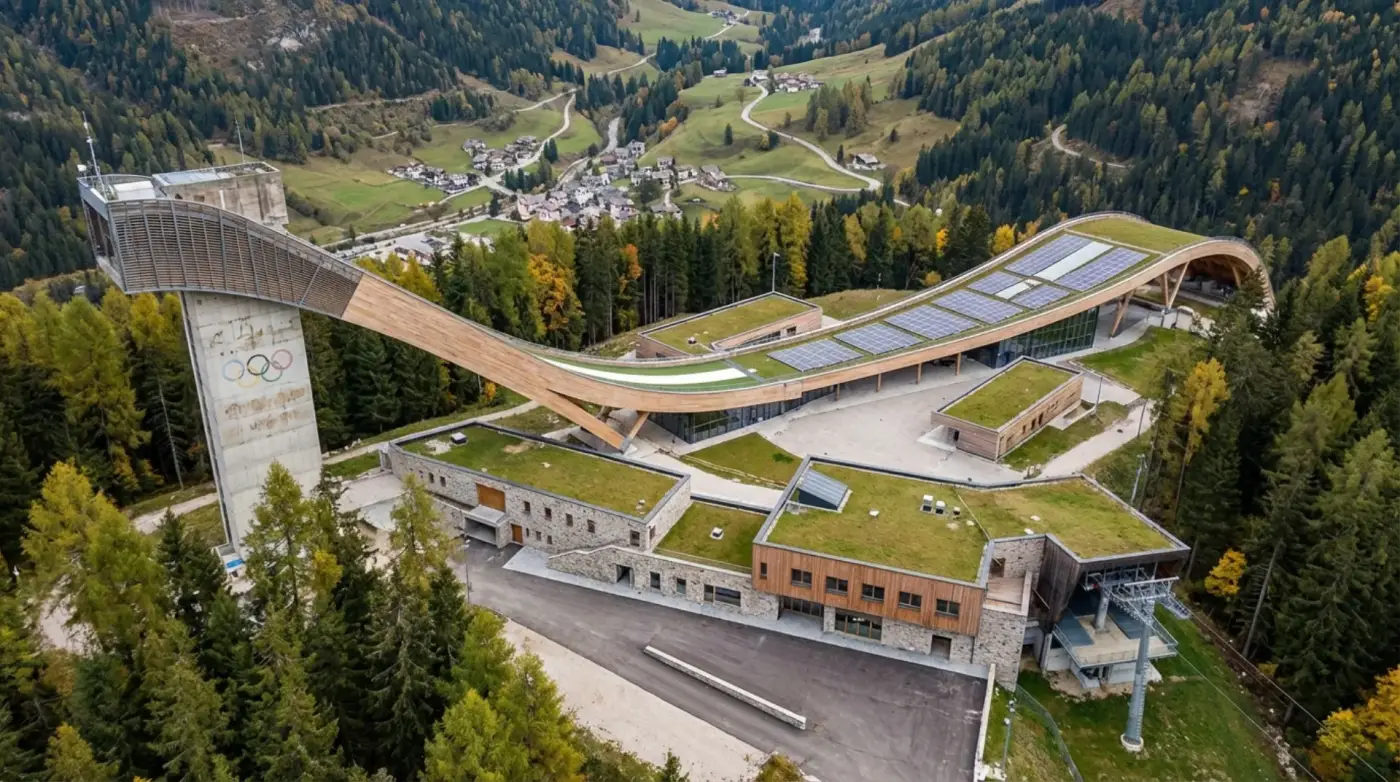
Every Olympics leaves a mark. But what will be the concrete legacy of the Milan-Cortina 2026 Winter Games for Italian skiing and mountain tourism? Beyond the medals and emotions, it is the investments in infrastructure, lifts and international visibility that define the true inheritance of an Olympic Games.
The Infrastructure Investments
The Milan-Cortina 2026 Olympics have generated an unprecedented flow of investment into Italian mountain areas:
Cortina d’Ampezzo
- Sliding Centre: 85 million euros invested in the rebuilt Eugenio Monti bobsled track, the most controversial but technically impressive structure
- Lift upgrades: several gondolas and chairlifts modernised or replaced
- Road improvements: the SS51 Dolomite road widened and safety-upgraded in several sections
- Urban regeneration: Cortina’s pedestrian centre repaved and improved
Bormio
- Stelvio run preparedness: significant investment in snowmaking and piste preparation equipment
- Finish area: rebuilt spectator facilities will serve future World Cup events
- Valtellinese road connections: improved winter maintenance capacity
Livigno
- Snowparks: Mottolino and Carosello venues are now among the best freestyle facilities in Europe
- Accommodation capacity: several new hotels opened in anticipation of Olympic demand
- Digital infrastructure: resort-wide high-speed connectivity
The Visibility Legacy
Perhaps the most valuable legacy is not structural but reputational. For sixteen days, Italian mountain destinations received global media coverage:
- An estimated four billion television viewers worldwide
- Social media reach across all platforms exceeded any previous Italian tourism campaign
- International press coverage equivalent to decades of traditional marketing spend
Industry projections suggest Italian Alpine tourism will see a sustained 10-15% increase in foreign visitor numbers through to 2030 as a direct result of Olympic exposure.
The Challenges: What Critics Say
The Olympic legacy is not unambiguous. Critics identify several concerns:
- White elephant risk: the Cortina sliding centre, used intensively for three weeks, must justify its ongoing maintenance costs (estimated at 3-5 million euros per year)
- Overtourism: the record visitor numbers of 2026 strain infrastructure and environment in sensitive Alpine areas
- Price inflation: the Olympic effect has pushed accommodation and ski pass prices higher, potentially pricing out domestic visitors
- Climate contradiction: investing in snow infrastructure while alpine glaciers retreat raises fundamental questions about long-term viability
The Path Forward: Using the Legacy Well
The most positive outcome depends on how Italian resorts use the Olympic spotlight:
- Four-season tourism: converting summer visitors from the Olympics online audience into mountain tourists year-round
- Sustainable investment: channelling future infrastructure spending towards low-carbon solutions (electric lifts, renewable energy, public transport)
- Accessibility: using the international attention to position Italy as a welcoming destination for all abilities and budgets, not just luxury tourists
- Local communities: ensuring the economic benefits reach valley communities and not just large hotel groups
The infrastructure will last for decades. The international visibility window is open now. Whether Italian mountain destinations seize this moment wisely will define Alpine tourism for a generation.