

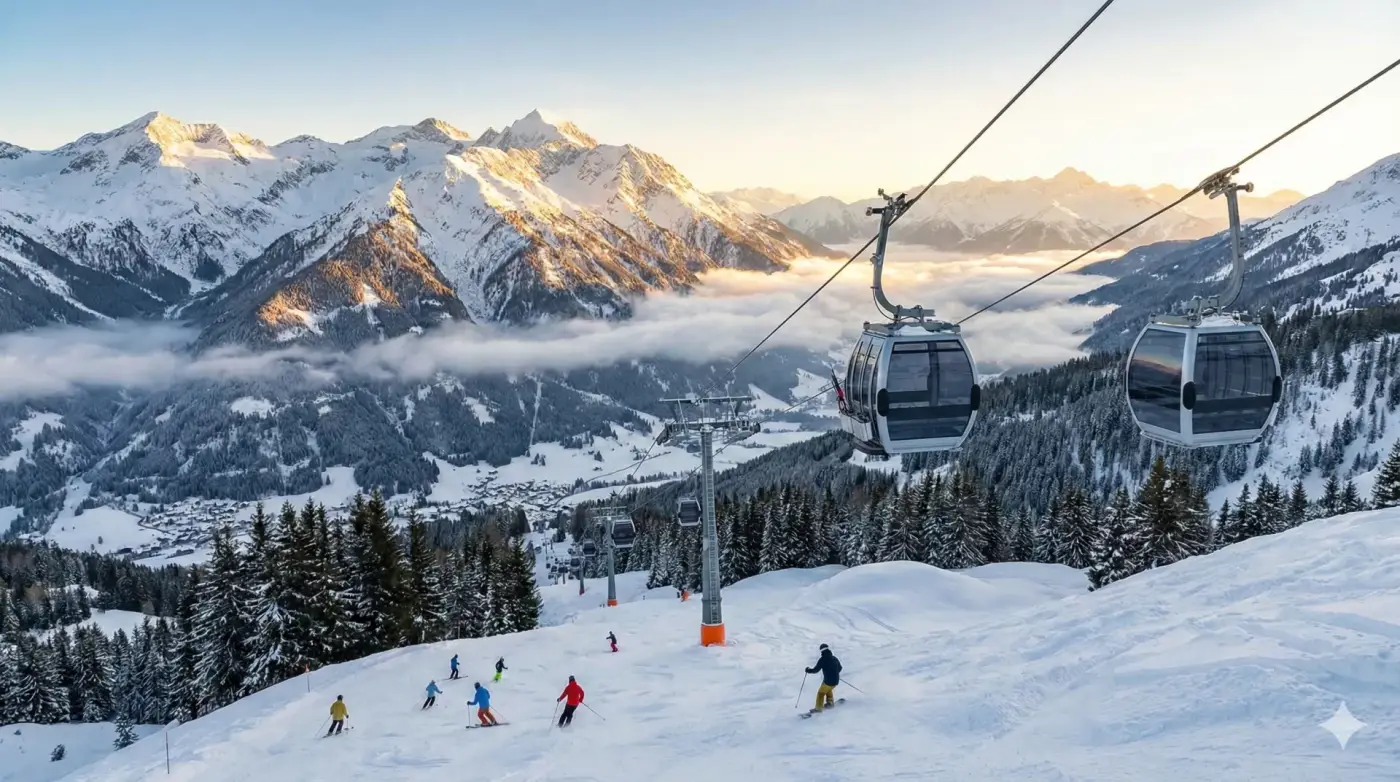
Arabba – Marmolada
Technical Dolomite ski area combining Arabba's steep runs with the Marmolada glacier at 3,265 metres.
Meteo Arabba – Marmolada
Altitude
1602 – 3265m
Slopes
63 km
Lifts
27
Ski Pass
€70
15-Day Forecast
Updated forecasts - Source Open-Meteo
In-Depth
Editorial guide by our team
Arabba-Marmolada is the eastern gateway to the Sella Ronda, a ski area that unites the modern resort of Arabba with the Queen of the Dolomites — the Marmolada, whose glacier sits at 3,265 metres above sea level. Two distinct personalities that complement each other: one technical and vertical, the other grand and silent, suspended between rock and permanent ice.
The Marmolada Glacier
The highest summit in the Dolomites at 3,343 metres carries one of the last skiable glaciers remaining in the Italian Alps. The descent from the glacier is among the most evocative in the entire alpine range: snow remains soft and well-compacted even in the later stages of the season, when terrain elsewhere has already hardened under the sun. Setting off from the Pian dei Fiacconi cable car and descending through glacial ice tongues with Dolomite walls towering on either side is an experience that resists straightforward description.
It is worth stating clearly: the Marmolada glacier is measurably retreating each year. Taking advantage of the opportunity to ski this glacial terrain while it remains accessible is not tourist rhetoric — it is a concrete appreciation of an experience that climate change is making progressively rarer.
The Arabba Slopes
The Arabba sector, separate from the glacier, develops across roughly 50 kilometres of runs with an average difficulty level higher than the Dolomite norm. Red and black pistes predominate here, and technical skiers who want genuine steepness and routes that require real ability will find Arabba genuinely satisfying. The Porta Vescovo cable car reaches 2,478 metres with exceptional views over the Sella group and towards Val di Fassa. From there, descents back to the valley run over consistent terrain with generous vertical, allowing long uninterrupted runs from top to bottom.
Position in the Sella Ronda
Arabba is the mandatory passage point for skiers completing the Sella Ronda anti-clockwise. The village sits precisely at the junction between the Campolongo pass leading to Alta Badia and the Pordoi pass, the gateway to Val di Fassa and Val Gardena. This geographic position makes Arabba a strategic hub for anyone covering the full circuit as efficiently as possible. Dolomiti Superski connections are complete: one pass gives access to over 1,200 kilometres of runs across the Dolomite region.
Arabba as a Base
Compared to other Dolomite resorts — Cortina, Alta Badia, Val Gardena — Arabba maintains a more compact and authentic atmosphere. The village is small, essential services are well organised, and the accommodation offer is solid without excess. Prices for accommodation and dining are generally more contained than at the area’s more glamorous neighbours. For the skier who wants to maximise hours on snow and minimise time and budget spent elsewhere, Arabba is one of the most intelligent choices in the entire Dolomite arc.
Getting There
The main approach from the south uses the A27 motorway to Belluno and then the SS203 Agordina to Arabba. From the north the most scenic route arrives from Trento via Val di Fassa and the Passo Pordoi, a mountain road open in favourable weather conditions that should always be checked before departure.
Live Webcams
Caricamento webcam...
Location
Must See
Attractions and points of interest in the area
Marmolada – 3265m
In funiviaFunivia fino a Punta Rocca (3265m), il punto più alto delle Dolomiti. Vista a 360° dalle Alpi orientali all'Adriatico. Museo della Grande Guerra in quota.
Serrai di Sottoguda
3 kmCanyon spettacolare lungo 2 km con pareti alte fino a 100m. Percorribile a piedi su passerelle. In inverno: cascate di ghiaccio per arrampicata.
Sellaronda – Accesso Arabba
Sulle pisteArabba è il punto di accesso al Sellaronda con le piste più tecniche e impegnative del circuito dei 4 passi.
Forte Tre Sassi – Museo
Passo ValparolaForte austriaco della Grande Guerra (1897) restaurato e trasformato in museo. Testimonianze del fronte dolomitico 1915-1918.
Winter
Summer
Local Flavors
Typical products and local specialties